> For the complete documentation index, see [llms.txt](https://docs.crosscurve.fi/llms.txt). Markdown versions of documentation pages are available by appending `.md` to page URLs; this page is available as [Markdown](https://docs.crosscurve.fi/crosscurve-metalayer-1/what-is-crosscurve-metalayer/crosscurve-pools-v2.md).
# CrossCurve Pools v2
## Introduction
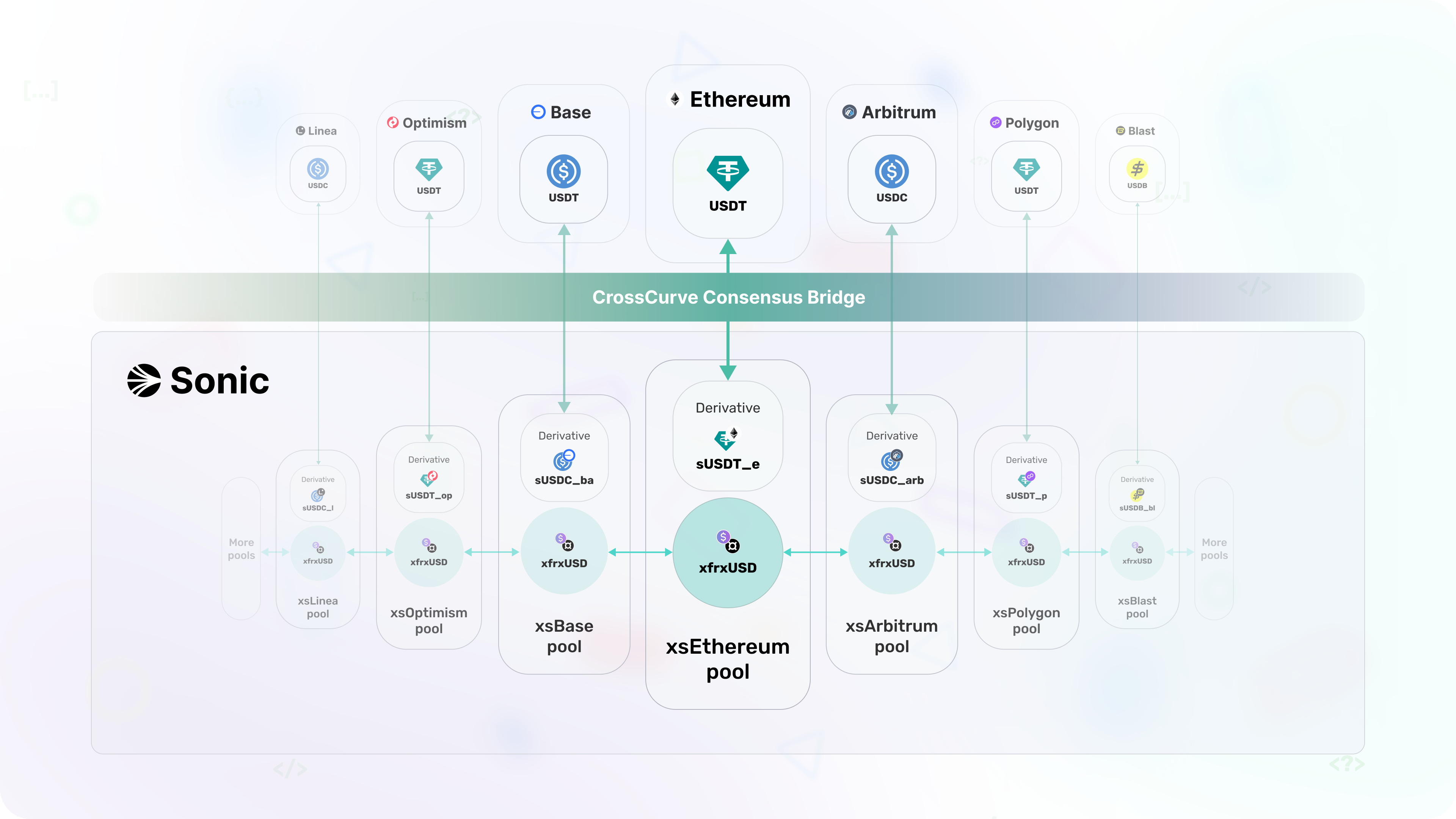
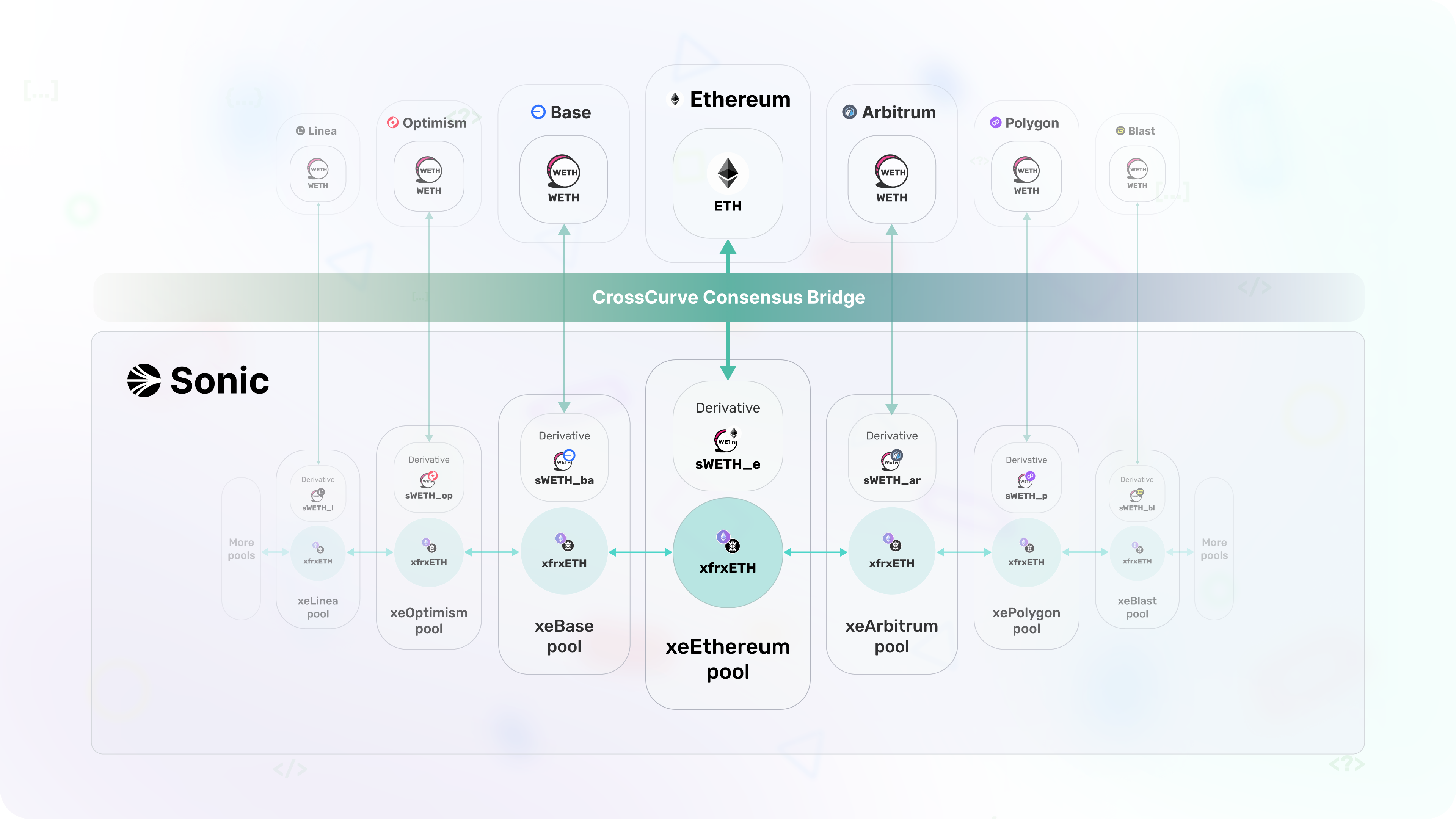
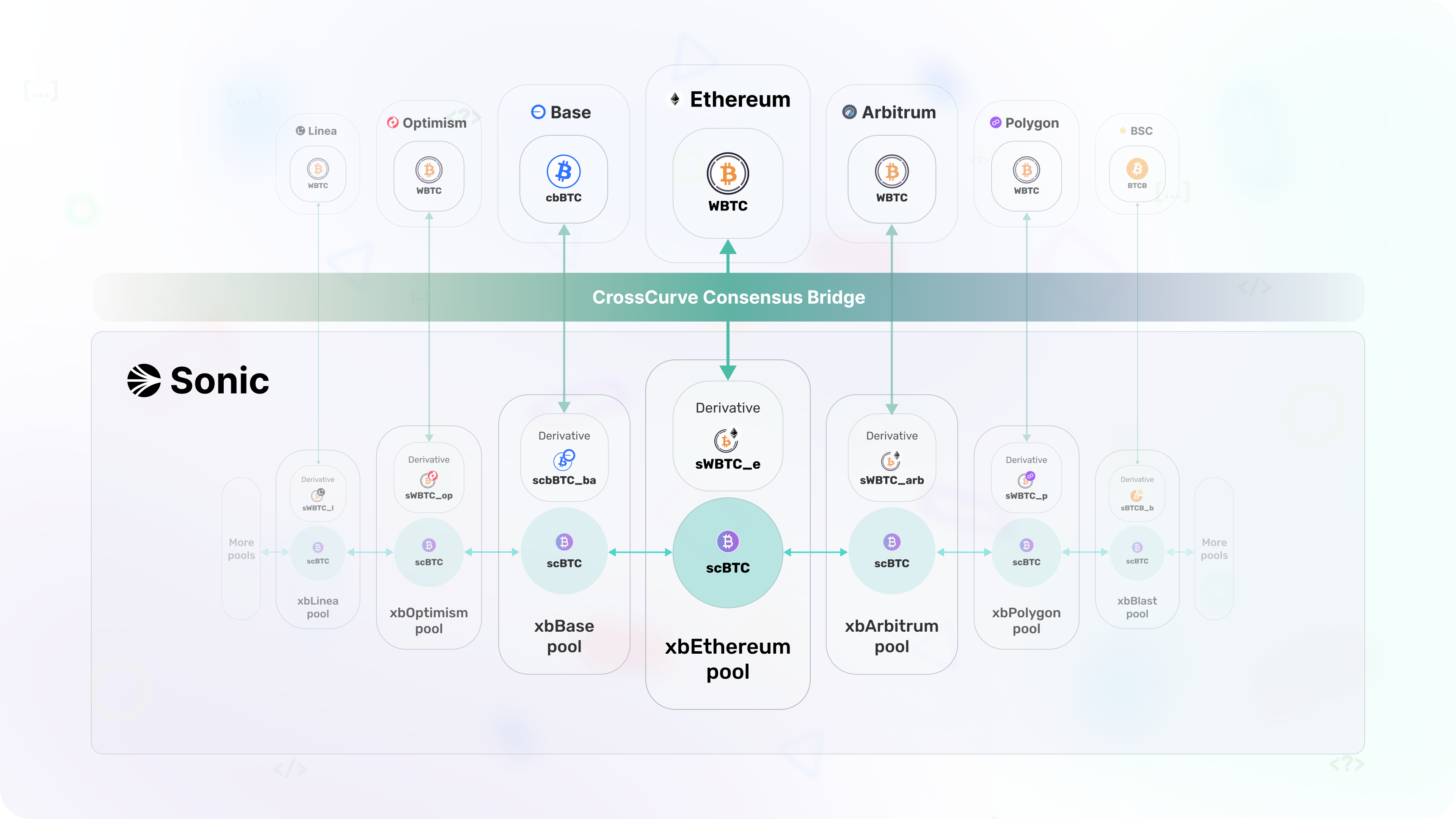
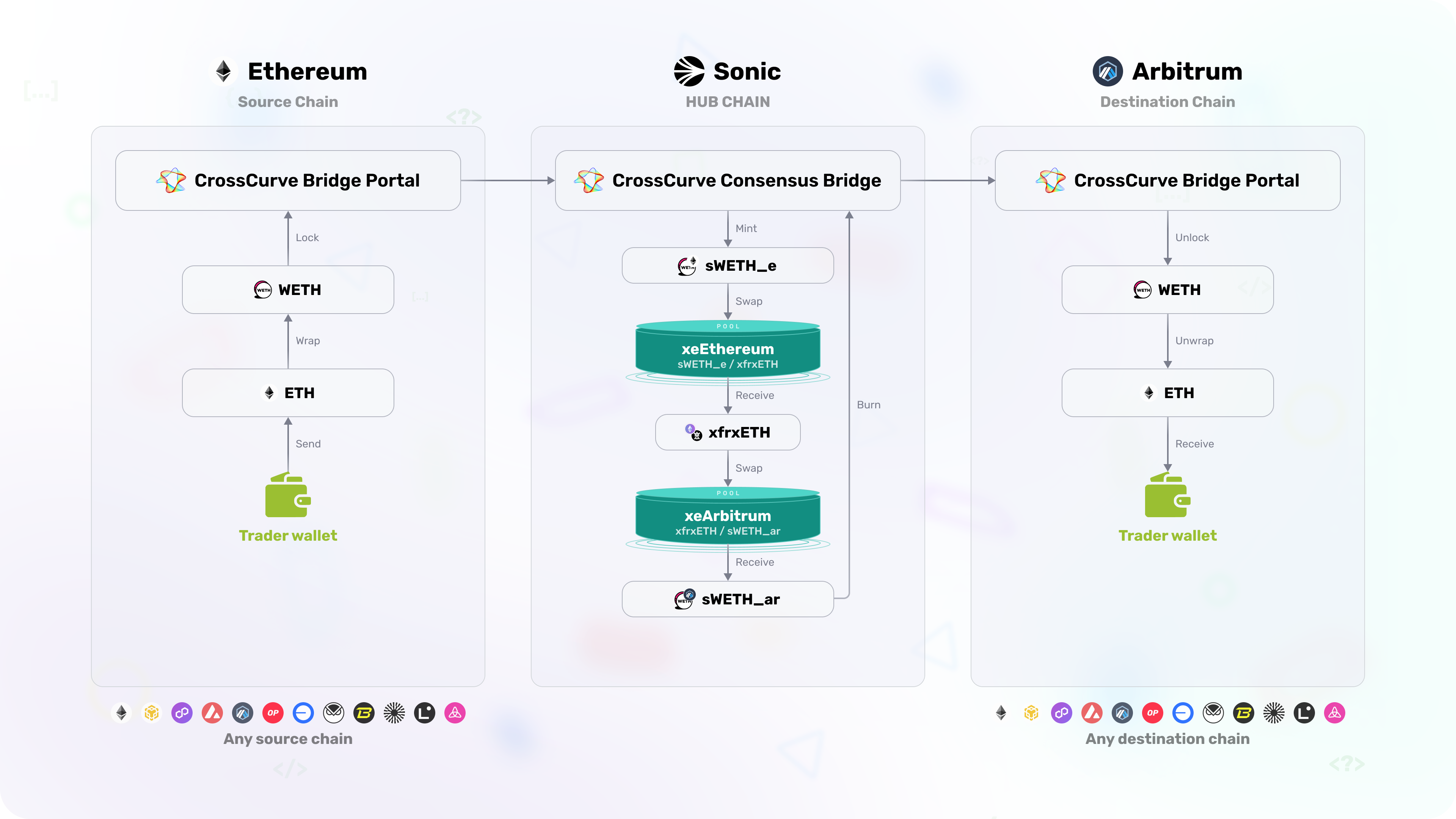
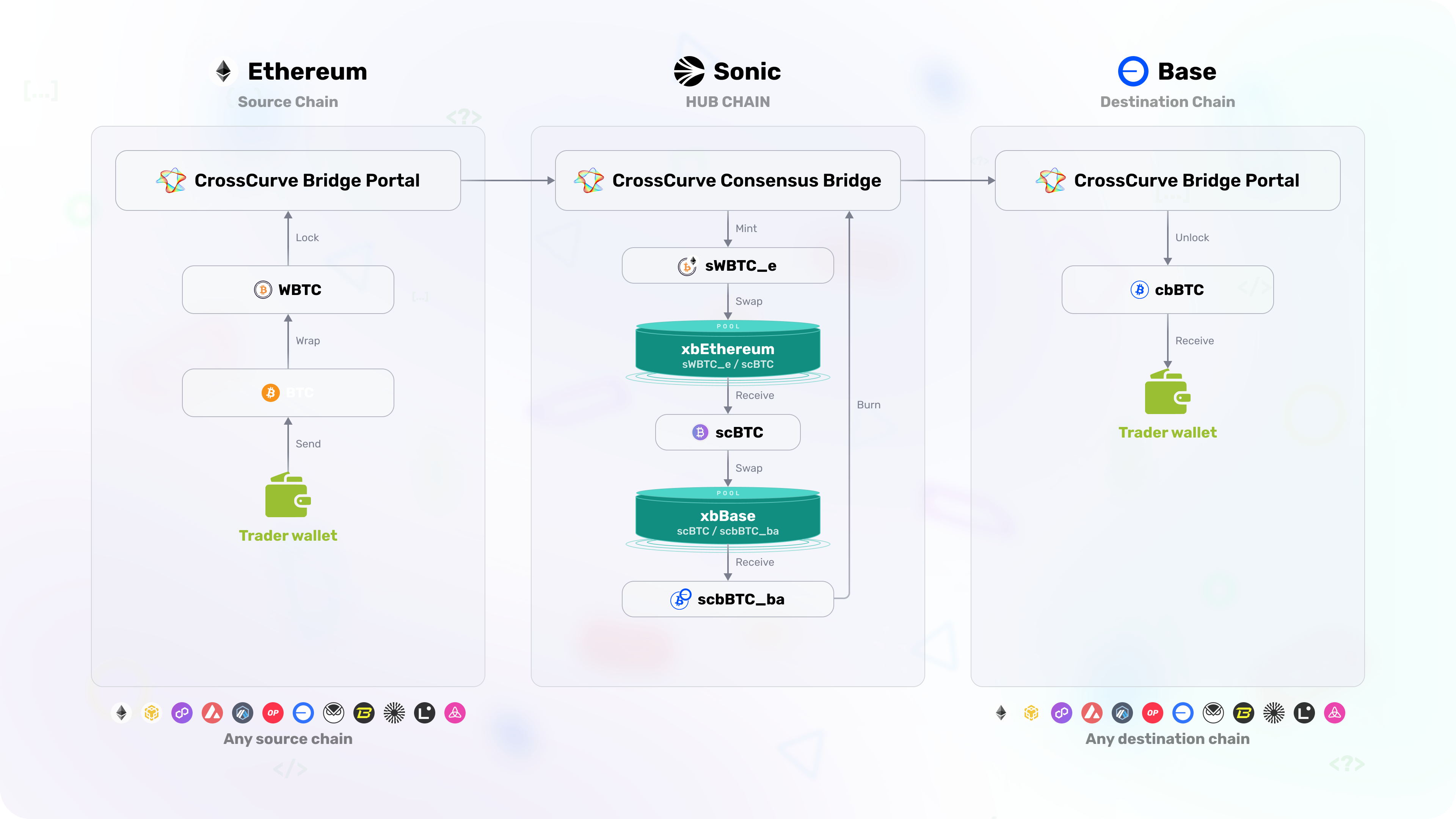
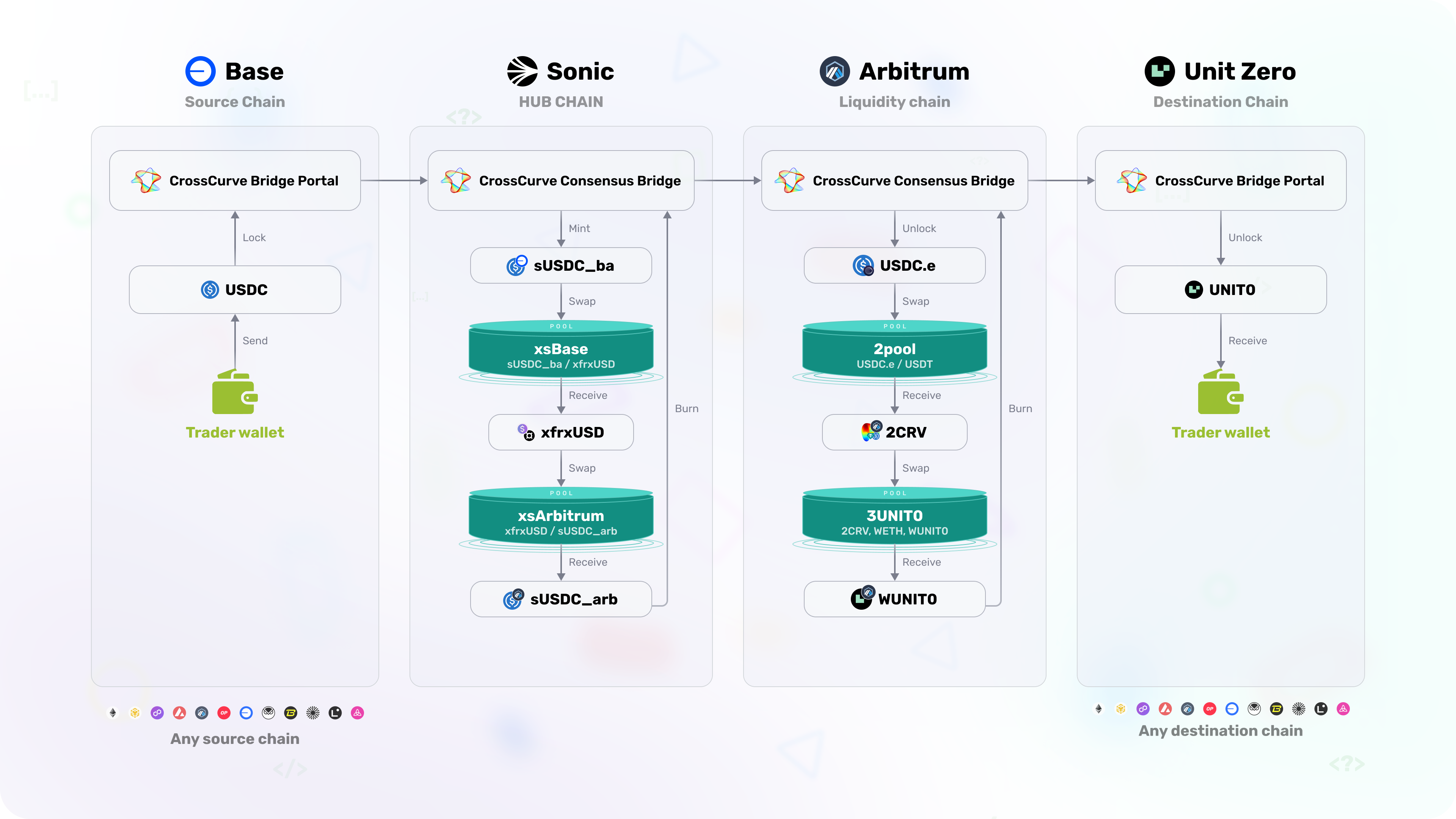
**CrossCurve Pools v2** is an advanced pool system designed to optimize cross-chain liquidity management within the **СrossCurve MetaLayer**. The system works with three primary asset types: **USD-**, **ETH-** and **BTC-**pegged tokens, which are issued by various projects across different networks. In the hubchain, a set of paired pools is created for each of these asset types. Each pool corresponds to a specific direction (blockchain) and functions as a bridge to that network.
## Pool Structure
Each paired pool in the hubchain consists of two tokens:
* **Universal token** - an asset from **Sonic**, common across all pools of the same type (**xfrxUSD** for **USD** assets, **xfrxETH** for **ETH**, and **scBTC** for **BTC**).
* **Synthetic derivative**, backed by the original asset locked in the **Consensus Bridge**. This can include both single assets and **Curve LP** tokens.
## Cross-Chain Transfer Process
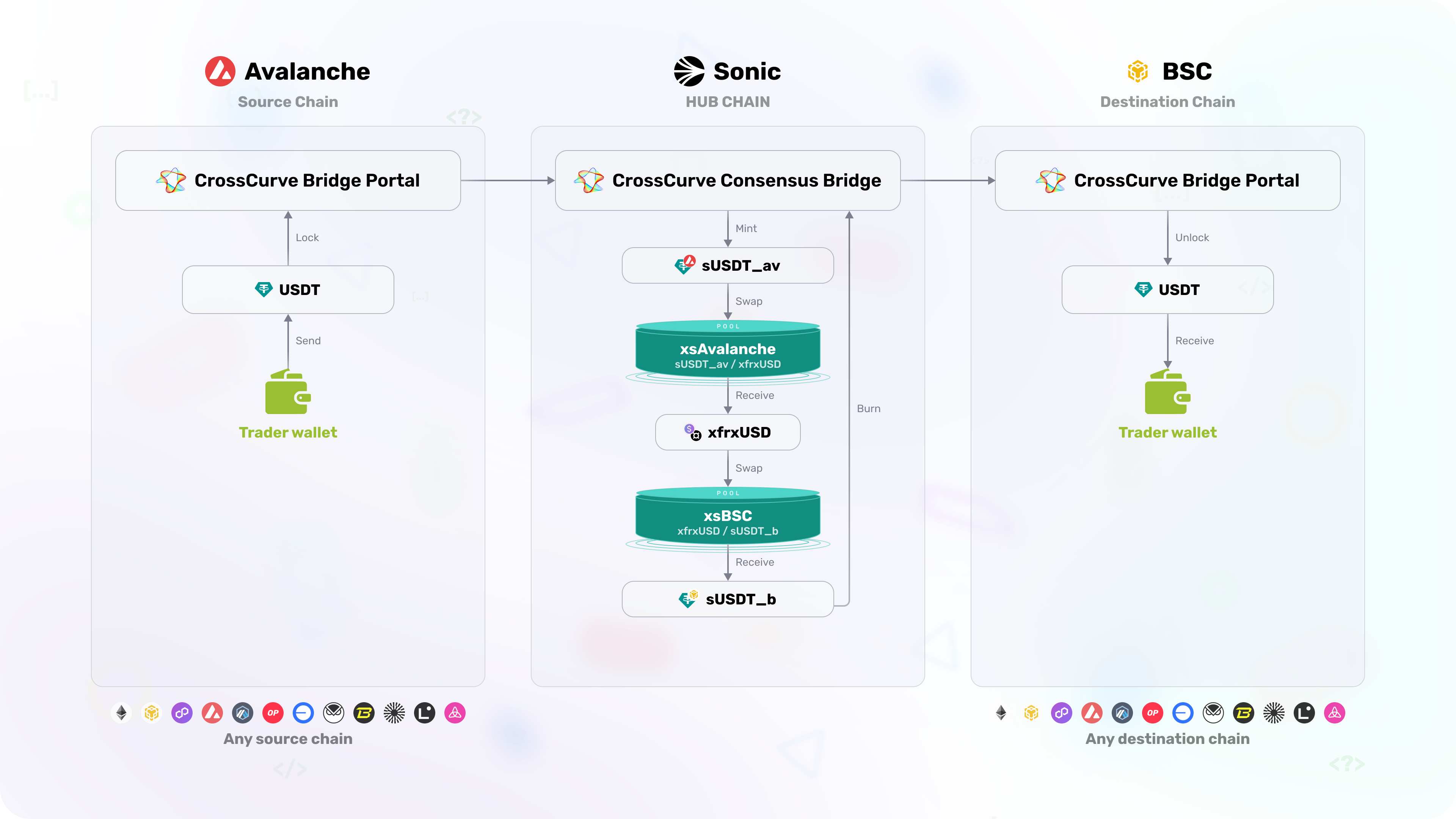
**CrossCurve Pools v2** enables asset transfers between blockchains in four stages:
1. **Bridge from the source network**: The original token is locked in the **Consensus Bridge** in the source network, and the **Consensus Bridge** then mints a synthetic token (derivative) in the **Sonic** network.
2. **Exchange for the universal token**: The synthetic token is exchanged for the universal token of the hubchain.
3. **Exchange for the destination synthetic token**: The universal token is exchanged for a synthetic token corresponding to the target blockchain.
4. **Bridge to the destination network**: The synthetic token is burned in the **Consensus Bridge** on **Sonic**, and the **Consensus Bridge** then unlocks the original token in the destination network.
## Advantages Compared to the Previous System
The previous pool system used **Curve** stable pools with 8 assets, connected via liquidity provider (LP) tokens from one or more pools. **CrossCurve MetaLayer** introduces a fundamentally new approach — liquidity isolation, where each pool contains liquidity only for a single direction. This design delivers the following benefits:
### 1. Targeted Incentives
In the previous system, incentives directed into a pool were distributed across all 8 directions, reducing their effectiveness. In paired pools, blockchains can direct incentives exclusively into their own pool, increasing liquidity in that direction and improving bridge conditions for users.
### 2. Reduced Slippage
In **Curve** stable pools, increasing the number of tokens in a pool leads to higher slippage under imbalance. A 2-token pool shows significantly less slippage compared to an 8-token one under the same imbalance. Additionally, in the old system, a significant imbalance in one token increased slippage for all 8 directions, while in paired pools, slippage growth is confined to an affected direction only.
### 3. Improved Liquidity Efficiency
To minimize slippage in the previous system, equal liquidity was required across all 8 directions, which was inefficient for less active ones. Paired pools allow using smaller amounts of liquidity for lower-demand directions while maintaining the same slippage level, thus optimizing liquidity utilization.
### 4. Lower Risk During Depegs
A depeg – where an asset drops in value relative to its underlying – is a common occurrence. In multi-asset pools within a single network, a depeg can have wide-reaching consequences for all connected networks, leading to a liquidity drain across all tokens in the pool. For example, in the previous system, if one asset dropped to zero in value while each had $100,000 in liquidity, the total loss across the remaining directions could reach up to $700,000.
In CrossCurve MetaLayer’s isolated pools, a depeg from one blockchain affects only a single pool. In the same scenario, losses would be capped at $100,000. The system automatically pauses the affected direction when a depeg is detected (based on price deviation), preventing further risks. However, a pool with the synthetic derivative of the depegged token remains in the hubchain until the price stabilizes.